

LIGHTING CANDLES
CHILDREN OF THE HOLOCAUST
This unique memorial, hollowed out from an underground cavern, is a tribute to the approximately 1.5 million Jewish children who were murdered during the Holocaust. Memorial candles, a customary Jewish tradition to remember the dead, are reflected infinitely in a dark and somber space, creating the impression of millions of stars shining in the firmament. The names of murdered children, their ages and countries of origin can be heard in the background.
The children's names are taken from Pages of Testimony in the Hall of Names, Yad Vashem.
The Children's Memorial was designed by architect Moshe Safdie and built with the generous donation of Abe and Edita Spiegel, whose son Uziel was murdered in Auschwitz at the age of two and a half.
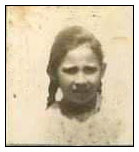
ADA TAGLIACOZZO
aveva otto anni; ebrea, non viveva nel ghetto, ma in via Salaria. Due portoncini sul medesimo pianerottolo: la casa dei nonni paterni, e quella di Ada, con i genitori e i due fratelli più piccoli. Perché quella notte tra il 15 e il 16 ottobre 1943 Ada dormisse nell'appartamento accanto al suo, nessuno l'ha mai saputo, e nessuno lo saprà mai: forse, voleva fare compagnia alla nonna. Le SS arrivano anche in via Salaria. Cercano i Tagliacozzo. Sulla porta dei nonni, c'è il cognome; su quella accanto, invece no. Prendono Ada, nonna Eleonora e zio Amedeo, un fratello del papà di Ada, e incredibilmente s'accontentano: non bussano nemmeno al portoncino accanto; o forse bussano, ma nessuno sente. Gli altri della famiglia si salvano così; anche se per Arnaldo, il papà di Ada, il salvataggio è solo provvisorio: quattro mesi dopo, verrà tradito da un amico (la solita "taglia" di cinquemila lire); andrà nel proprio negozio di sarto per consegnarli degli abiti, ma vi troverà un maresciallo dei carabinieri e una SS: e anche per lui Auschwitz diverrà l'ultima tappa della vita ........ un treno è partito per Auschwitz: « E' giunto all'alba del 23 ottobre, dopo cinque giorni di viaggio, e 834 persone... finiscono subito nella camera a gas. Anche Ada; anche nonna Eleonora .... ». A guerra finita, si parla molto poco: troppo grande il dolore
------------------
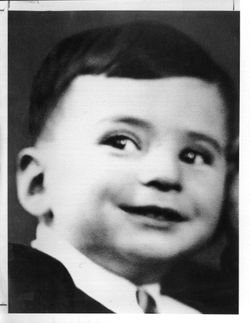
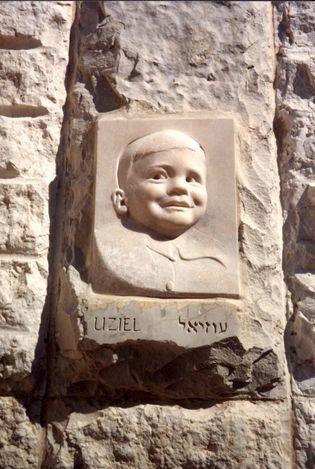
Uziel Spiegel's carved sculpture in the entrance to the Children's Memorial at Yad Vashem - The World Holocaust Remembrance Center in Jerusalem

"Ferramonti... a name that is searched in vain on geographical maps. Reclaimed swamp, hot in summer and freezing cold in winter, teeming with insects. An hour of rain transforms it back into an impracticable quagmire. Ferramonti ... name that says nothing to the Italians but that sounds sad and nostalgic to the hearts of thousands of Jews who were already refugees in Italy and now scattered in the most remote districts of the world "[taken from the presentation poster of" The Italian concentration camps for Jewish refugees 1940-1945 ",
The fascist concentration camp of Ferramonti di Tarsia, in the province of Cosenza, was opened on 25 June 1940.
"Ferramonti was an exception to all other camps of this type: it was made up of shacks and was built precisely for internment."
The majority of foreign Jews who, after Italy's entry into the war, were still in Italian territory were imprisoned there.
In total, between 25 June 1940 and September 1943 Ferramonti hosted about 7-8000 people. Initially, only Jews and Catholics or Protestants of Jewish origin were interned there. From the end of 1941 there were Chinese, Greek, Corsican and Yugoslav internees, all deported mostly for political reasons.
The camp was organized in barracks, some also suitable for hosting families.
Michele Sarfatti observes that
"The Ferramonti camp, given the size of its population and therefore also the variety of internal life and the possibility for inmates to develop forms of self-organization, had not a few points of contact with a ghetto."
The Children's Canteen created by Israel Kalk, immediately took care of bringing assistance and comfort goods to the prisoners of the camp, sending packages with clothing, food, games.
Kalk visited Ferramonti for the first time in April 1941, realizing the conditions of deprivation suffered by the children locked up in the camp. The negative impression he got from it led him to include interned children in the assistance provided by the canteen. In short, he was able to distribute food, soap, toothbrushes, notebooks and pencils to Ferramonti. The canteen also provided school materials - blackboards, chalk, books - as well as stoves for heating the classrooms and the children's meals.
After all, there were many children and their families transferred from Milan to Ferramonti who wrote to Kalk asking, even in detail, to send especially clothing.
Kalk was authorized by a special pass issued by the Milan Police Headquarters to visit the Ferramonti camp four times.
It was on those occasions that he was able to take the numerous photos that today make up the five photo albums on Ferramonti, which are then kept in his personal archive.
It should be remembered that Ferramonti's photos - such as those collected in the album on the Milan Children's Mensa - were an integral part of Kalk's fundraising activity for the "Children's Mensa" - as can be deduced from the text that opens the album.